

One of the primary benefits of vertical analysis is that it standardizes financial statements, making it easier to compare companies of different sizes and across various industries. This approach is beneficial for investors and business owners who need to evaluate financial health quickly and efficiently. According to a recent report by the Corporate Finance Institute, AI-driven tools have significantly improved the efficiency and accuracy of vertical analysis. Thus, vertical analysis is a financial analysis technique where each item in a financial statement is expressed as a percentage of a base figure. This allows standardized comparisons across periods or between companies of vertical analysis example varying sizes. Horizontal Analysis (also known as trend analysis) evaluates financial statement items over multiple periods by calculating the percentage change for each line item from one period to the next.

Rates of Return and Profitability Analysis
Practitioners should ensure data accuracy, use Vertical Analysis alongside other financial tools, and consider the broader context to make well-informed decisions based on the analysis results. Vertical Analysis can be complemented with tools like Horizontal Analysis, Ratio Analysis, bookkeeping and Trend Analysis to provide a more comprehensive understanding of a companys financial health and performance. To perform a proportional analysis, each cash flow item is divided by the total cash inflows or outflows, then multiplied by 100 to get a percentage. Finally, ratio analysis, a central part of fundamental equity analysis, compares line-item data.
Related AccountingTools Courses
Vertical analysis helps businesses evaluate financial structure and make informed decisions by converting balance sheet items into percentages. It standardizes financial statements, making it easier to compare companies and assess financial health. In contrast, vertical analysis examines financial data within a single period, converting each line item into a percentage of a base figure. This allows for a quick snapshot of financial composition and helps businesses understand how different components relate to the whole. For example, vertical analysis of a balance sheet can reveal what proportion of a company’s total assets are tied up in inventory or how much of its financing comes from liabilities versus equity.
Balance Sheet and Leverage Ratios
To show how this works in practice, let’s use an imaginary company with real analysis problems – ACME Inc.
The Income Statement

To conduct a vertical analysis of balance sheet, the total of assets and the total of liabilities and stockholders’ equity are generally used as base figures. All individual assets (or groups of assets if condensed form balance sheet is used) are shown as a percentage of total assets. The current liabilities, long term debts and equities are shown as a percentage of the total liabilities and stockholders’ equity. Likewise, all the items in the balance sheet are stated as a percentage of the total assets.
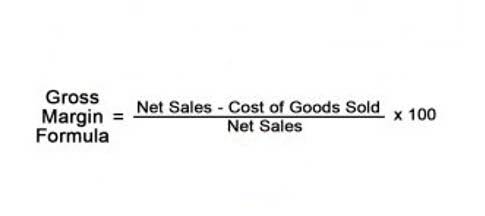
- Vertical analysis turns key financial ratios (gross margin, operating margin, etc.) into clear insights when they are shown as a percentage of revenue.
- It could possibly be that they are extending credit to customers more readily than anticipated or not collecting as rapidly on outstanding accounts receivable.
- Vertical financial analysis is a key part of financial statement analysis that helps you understand how your company performs.
- If, for example, the rationale being utilized on the income statement is revenue, then each piece of data will be expressed as a percentage of the revenue being used.
- Thus, performing vertical analysis helps in many ways, especially when we are planning to invest or buying a business.
Identifying these red flags early can help stakeholders take preventive measures or reassess their involvement with the company. Discover the key financial, operational, and strategic traits that make a company an ideal Leveraged Buyout (LBO) candidate in this comprehensive guide. In the event that, for example, the profit per unit falls below a specified threshold percentage, management may consider suspending operations at that particular unit. The management team of a company could use the percentages to set Bakery Accounting goals and define threshold restrictions using these numbers. In order to answer these questions, and much more, we will dive into the income statement to get started. Like any financial calculation and analysis, vertical analysis is not complete by itself and has pros and cons.
In the world of business, there’s a critical distinction between different types of profit that can impact decisions at every level. For instance, you can see that every year, advertising costs are equal to 10% of revenue (vertical), but in rupees, it has gone from ₹50,000 to ₹1,00,000 in five years (horizontal). Thus, if two companies spend 30% of sales on marketing, you may say they act the same (they behave the same), even if their actual spending is different. We must also consider that there may be another factor responsible for the significant rise in total sales in year 3 – such as a robust economy driving significantly higher sales in this year.
- Such a statement merely combines the income statement and the statement of retained earnings.
- Brixx can facilitate both horizontal and vertical analyses, empowering users to gain a comprehensive understanding of their financial statements.
- This means that Apple’s capital expenditures were 9.1% of its total net cash from operating activities for the year.
- Consistency constraint here means that the same accounting methods and principles must be used each year since they remain constant over the years.
- For the below example, revenue in Year 3 was $55,749, and in Year 2, it was $53,494.
- Additionally, learn to apply financial analysis techniques in valuing a business and making informed investment decisions based on financial performance and industry benchmarks.
- Vertical analysis looks at the contributing percentage of each line item to the total base figure.
Vertical analysis vs horizontal analysis
For example, a company’s management may establish that the robust growth of revenues or the decline of the cost of goods sold as the cause for rising earnings per share. By exploring coverage ratios, interest coverage ratio, and cash flow-to-debt ratio, horizontal analysis can establish whether sufficient liquidity can service a company. Horizontal analysis can also be used to compare growth rates and profitability over a specific period across firms in the same industry. This percentage can be used to compare both balance sheet and income statementperformance within the company. Much like ratio analysis, vertical analysis allows financial information of a small company to be compared with that of a large company. The common size percentage can also be used to compare different companies within the same industry or companies that use different currencies.